


EXE Yixie is a focus on high-end PCB automatic depaneling machine R & D and manufacturing, the company was founded in 2000 in Taipei, Taipei, 2010 will be the production base in Dongguan, China, company focusing on the research and development of PCBA automatic board parting machine, milling cutter board parting machine and online board parting machine. Production, sales and service as one of the enterprises.
Why Choose Us
Our factory
The factory covers an area of 1500 square meters, houses several specialized workshops and professional production lines. This setup ensures a stable output of high-quality drill bits each month. Our competitive edge lies in the quality of our products, crafted from top-notch tungsten carbide material.
Product Application
Yixie has experienced R&D design team and perfect after-sales service system, the products are used in high-end manufacturing industry PCBA sub-board such as smart phones. Smart wearable. Smart home. Tablet computers. Automotive electronics. Medical instruments. Aerospace. Military industry. Household appliances and other fields.
Our Service
After-sales staff are on call 24 hours a day.Regardless of Saturdays, Sundays and holidays.365 Day Overall equipment warranty period.Free after-sales maintenance and replacement.


Advantages of Reflow Oven Profiler
The simple and convenient in operation, all data are managed by database, can use the wizard to quickly import process analysis;
The software is equipped with simple, complex, in English, Korean, Japanese and other languages;
The high temperature protection, instrument internal temperature exceeds70degrees automatically closed test function, beyond 80degrees automatically closed power;
The sampling frequency setting (0.05 seconds to 30 minutes);
The measurement accuracy of ± 0.5℃( -40℃ ~ 1370℃), acquisition mode can choose the start button, temperature trigger to initiate or time start;
The intelligent control of any situation, both the indicating tip ( power is low, the charge state, data download, data
Specification of Reflow Oven Profiler
|
Precision |
+/-1.2℃ |
|
Resolution |
0.3 ℃ ~ 0.1 ℃ |
|
Internal operating temperature |
0 ℃ ~105 ℃ |
|
Suitable for thermocouples |
9/12 K-type thermocouple |
|
Measuring temperature range |
-150℃ ~1050 ℃ |
|
System compatibility |
Personal computer |
|
Power requirements |
9 Volt alkaline battery |
|
Dimensions (with standard insulation sleeve) |
Length 323* width 86* height 26 (mm) 9 channels Length 323* width 108* height 26 (mm) 12 channels |
|
System minimum requirements |
400MHz processor, 1GB available hard disk storage, 1024*768 resolution/16-bit, Microsoft® Windows® 2000 or XP3 |
- Establish the reflow specification for the PCB assembly – using the guide. Determine T1 (reflow or full-liquidus temperature), and T2 by finding the most vulnerable component (MVC)
- Attach thermocouples to the assembly
- Set heat emitters and conveyor speed of the oven to the recommended basic profile of the manufacturer
- With the KIC traveller attached to the thermocouple leads, run the board through the oven
- If using the KIC Prophet auto-prediction system (recommended) follow the instructions. If not, multiple runs may be required
- Assure that all test (thermocoupled) points have reached T1
- Assure that no test points have exceeded T2
- Assure that at no point in the profile, the specified rate of heating has been exceeded
- Increase oven conveyor speed to affect a reduction of liquidus dwell but assure that all points do not fall below the T1 value
- Upon achieving minimum liquidus dwell with all points above T1 (but below T2), assure that the preflow soak, if incorporated, falls within the temperature range and duration specified in the guide
- Assure that the rate of heating does not exceed the specified rate of heating at any point within the profile

Reflow oven profiling can be a slow, costly and painstaking endeavor. Reflow profiles using thermal couples (TCs) can be as useful as ion-chromotography (IC) and strain gauge (SG) testing. However, the incorrect placement of TCs or SGs, or choosing the wrong location to run an IC test, can provide inaccurate results. No matter where a thermal couple (TC) is placed, if the oven is well-constructed, designed, and maintained, the entire assembly will be subjected to the same oven settings.
The first step in profiling is to establish a baseline temperature for the oven. At any point of travel within the oven—from entrance to exit—a TC should measure the same temperature from the front of the oven to the back. Ideally, the proximity of a TC to the transport rails should not affect the heating uniformity as compared to one located in the middle of the gap between the rails or at any point in-between. If using the mesh belt, the heating uniformity should not vary across the useable width of the belt.
Once the baseline is established, it should not vary between shifts, changes in plant environment, preventative maintenance cycles, etc. If the oven is uniform and stable, placing a thermal couple on the smallest component will ensure every similar component measured anywhere else will yield a similar measurement; the same goes for the largest component. If you have access to the PCB Gerber files, look for a location on the circuit board where the lowest density of internal copper layers, copper pours, and thermal sinks can be found. This location will tend to be the hottest spot on the circuit board where the first TC should be placed. The largest component along with the highest density of layers, copper pours, and thermal sinks will be the coolest spot on the PCBA. Place the second TC at this location.
With these two TC locations identified, essentially everything else in-between is considered moot. Dial in a profile that reduces the temperature difference between these two extremes. The profile should also fall within the process window for the solder paste being used. Since the size of the circuit board and the loading (the gap between successive PCBs flowing through the oven) can affect heating uniformity between PCBAs, it is important to characterize the effect these differences can have by simply running the profile PCBA by itself and with maximum loading. Since loading is variable during production, a well-designed oven should minimize such an effect, but proof is needed. The upfront work necessary to provide evidence of oven uniformity and stability is a prerequisite to using this two-TC approach; otherwise, use as many TCs as the profiler can accept.
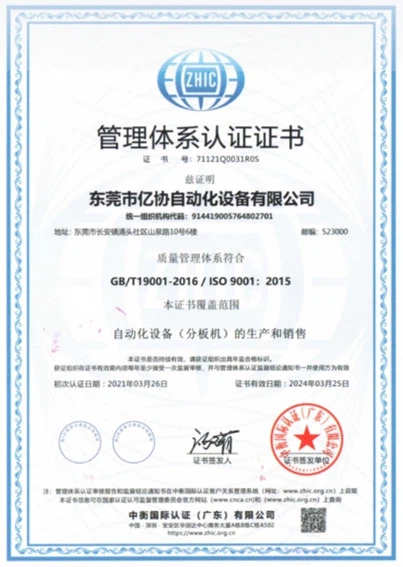
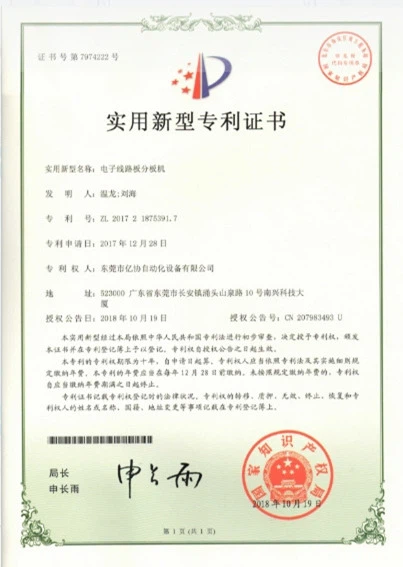
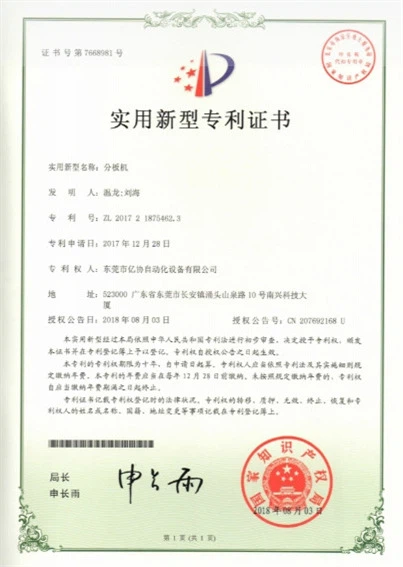
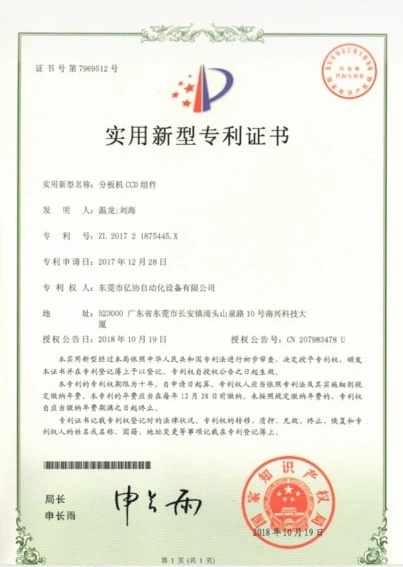
Our Certificate
FAQ
We're professional reflow oven profiler manufacturers and suppliers in China. Please feel free to wholesale high quality reflow oven profiler for sale here and get quotation from our factory. Good service and competitive price are available.
temperature profiling for underwater equipment, temperature profiling in reactors, temperature profiling for actuators