


You Professional Wave Soldering Oven Temperature Tracker Manufacturers
EXE Yixie is a focus on high-end PCB automatic depaneling machine R & D and manufacturing, the company was founded in 2000 in Taipei, Taipei, 2010 will be the production base in Dongguan, China, company focusing on the research and development of PCBA automatic board parting machine, milling cutter board parting machine and online board parting machine. Production, sales and service as one of the enterprises.


Why Choose Us
Our Factory
The factory covers an area of 1500 square meters, houses several specialized workshops and professional production lines. This setup ensures a stable output of high-quality drill bits each month. Our competitive edge lies in the quality of our products, crafted from top-notch tungsten carbide material.
Product Application
Yixie has experienced R&D design team and perfect after-sales service system, the products are used in high-end manufacturing industry PCBA sub-board such as smart phones. Smart wearable. Smart home. Tablet computers. Automotive electronics. Medical instruments. Aerospace. Military industry. Household appliances and other fields.
Production Market
Yixie adhering to the "quality first, service first" business philosophy, has successfully served thousands of enterprises, and won unanimous praise!
Our Service
After-sales staff are on call 24 hours a day.Regardless of Saturdays, Sundays and holidays.365 Day Overall equipment warranty period.Free after-sales maintenance and replacement.
Advantages of Wave Soldering Oven Temperature Tracker

Automated Process
Selective wave soldering is an automated process that requires minimal manual intervention, making it highly efficient. This is in contrast to other forms of soldering, where the process is manually-intensive and requires skilled operators to perform the task.
High-Quality Soldering
Selective wave soldering is a high-quality soldering method that ensures precise solder joints on the circuit board. This is because the solder wave is targeted only at specific areas, which ensures that the soldering process is carried out with precision and accuracy.

Faster Production Times
Selective wave soldering is a fast process that significantly speeds up the production time as compared to other methods of soldering. The automated process allows for faster throughput, meaning that more boards can be produced within the same amount of time.

Improved Solder Quality
Selective wave soldering allows for the application of high-quality solder that is free from voids and other defects. With this precise method, the solder is well-distributed and covers the entire area of the circuit board, ensuring that the joints are strong and reliable.

Reduced Costs
Selective wave soldering carries with it several cost-saving benefits. A high-quality solder joint means less repair and rework, which can significantly reduce the cost of production. Additionally, the faster production times associated with selective wave soldering can lead to cost savings in the production process.

Improved Repeatability
With selective wave soldering, the process is repeatable and can be easily reproduced, which ensures consistent quality in the final product. This is possible because the process is automated and programmed, meaning that the same settings can be easily applied to any batch of circuit boards with a high degree of precision.
Specification
|
Instrument Model |
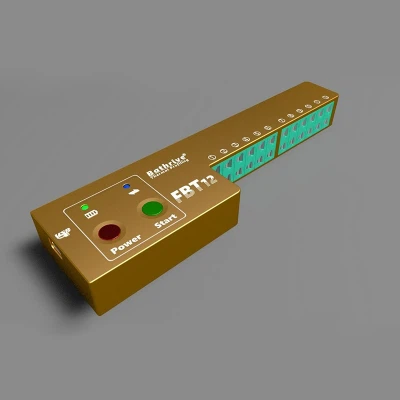
Bathrive_FBT62 |
|
Number of channels |
6 |
|
Instrument size |
103 * 57 * 20 (mm) |
|
Measurement accuracy |
±0.5℃ |
|
Temperature resolution |
0.1℃S |
|
Sampling speed |
100 times/sec~1 hour/time |
|
Storage space |
128Mb |
|
Number of storage groups |
255 groups |
|
Battery capacity |
1000MA explosion-proof high temperature resistant battery |
|
Instrument start mode |
Temperature, time, button |
|
Instrument stop mode |
Temperature, time, button, communication |
|
Instrument working temperature |
-40~85℃ |
|
Instrument temperature measurement range |
-200~1370°C |
|
Thermocouple type |
K type |
|
Communication port |
USB |
|
Software Language |
Chinese Simplified, Chinese Traditional, English |
|
Software platform |
WIN-XP, 7, 10, 11 (32 or 64 bit system) |
|
SMT industry |
Reflow wave soldering |
|
Product Use |
Used for temperature measurement of various heating or cooling equipment. Long-term temperature monitoring. Temperature profiling and temperature data analysis, etc. |
|
Scope of application |
SMT electronic manufacturing. Metallurgy. Heat treatment. Baking and painting. Brazing. IR. Tunnel furnace and all other industries that require temperature monitoring or measurement. |
Types of Wave Soldering Oven Temperature Tracker
Smart Series of Wave Soldering Machine
It offers a U-shaped heater that can help reduce energy consumption by up to 20% and an independent spray control system for consistent and precise soldering. These machines also feature a quick-release nozzle for easy cleaning and maintenance to keep them in optimal condition.
Full-Tunnel Entire Nitrogen Wave Soldering System
It uses a closed preheating environment and a tunnel-based entire nitrogen wave to improve solder wetting on PCBs. It features a PID closed-loop control system, which ensures precise and consistent soldering.

SE Series Lead-Free Dual Wave Soldering System
It is a high-performance soldering system suitable for both SMT and THT assembly. It features a closed loop with an inverter, a spray nozzle, and an air cooling system. This system is powered by a 1/4 HP high-power motor, delivering consistent and reliable wave soldering performance.
US Series Lead-free Wave Soldering System
It offers dual-axis linkage, infrared preheating modules, a tin furnace, and a guide rail with a capacity of 60 kg. This system is ideal for producing high-quality solder joints and meets the demands of lead-free soldering applications.
Application Field of Wave Soldering Oven Temperature Tracker
Electronics Manufacturing
Wave soldering technology is a commonly employed method in the electronics sector for producing PCBs utilized in various industries such as consumer electronics, automotive electronics, telecommunications, aerospace, and defense.
Industrial automation
The wave soldering machine plays a crucial role in the process of industrial automation as it is essential for achieving high-quality mass production.
Medical devices
Wave soldering finds extensive application in the production of medical devices, including imaging systems, life support equipment, implantable devices, and more, which demand superior reliability and quality standards.
Lighting industry
The manufacture of LED panels in the lighting industry involves utilizing wave soldering, which demands accurate soldering techniques to1. make certain superior durability and reliability.
Automotive industry
The automotive sector employs wave soldering during the production of electronic components, including printed circuit boards for controlling systems, managing engines, and entertainment systems in cars.
Wave Soldering Oven Temperature Tracker Process
Flux Application
The use of flux in wave soldering is essential to produce clean and strong solder interconnections on the printed circuit boards. The flux helps to clean the metal surface to prevent any present formation of any oxide layer. Therefore, it prevents the solder from wetting the surface adequately. This way, the flux removes the oxides that hinder the interaction between the pins and boards. Additionally, it minimizes the drag coefficient affecting the electrical connections.
Preheating
PCBs are first exposed to heat in a heat tunnel conveyor system before they are exposed to waves of molten solder. This step is critical as it initiates the flow applied on the surface of the PCB. The soldering process requires the solder to form a good bond with the components, which is made possible by activated flux. Preheating also helps reduce moisture on the PCBs, which would be a problem when soldering. Preheating is gradually heating the PCBs to avoid thermal shock, which is detrimental to the solder joints. Moreover, it preheats the PCBs in preparation for the soldering process to the right temperature suitable for soldering.
Wave Soldering
Here, the solder is applied in a controlled wave on the surface of the PCB. When heated, the solder paste on the board becomes a liquid and forms a wave of solder. This wave mainly passes over the PCB, joining components to the board and making stable electrical connections. Besides attaching the elements to the PCB, the molten solder gives mechanical support and electrical insulation to the joints.
Cooling
PCBs are then cooled to allow the solder joints to cool, harden, and set the components. Cooling is essential because it helps avoid deformation of the PCBs due to the heat left on them. The specified temperature is lowered slowly so the solder joints can solidify and make a firm connection. It ensures that the connections made during wave soldering are strong and can endure heat and vibrations. Through controlled cooling, the manufacturers can guarantee the integrity of the soldered joints and, thus, the quality of the PCB assembly.
FAQ
We're professional wave soldering oven temperature tracker manufacturers and suppliers in China. Please feel free to wholesale high quality wave soldering oven temperature tracker for sale here and get quotation from our factory. Good service and competitive price are available.
Furnace Temperature Profiler FBT16, Furnace Temperature Profiler FBT10B, Furnace Temperature Profiler FBT82